Category: Sitrep

  • What is Happening in Ah Nyar? October, 2026 [Issue 10/2026]
    What is Happening in Ah Nyar? October, 2026 [Issue 10/2026]

    What is Happening in Ah Nyar? October, 2026 [Issue 10/2026]

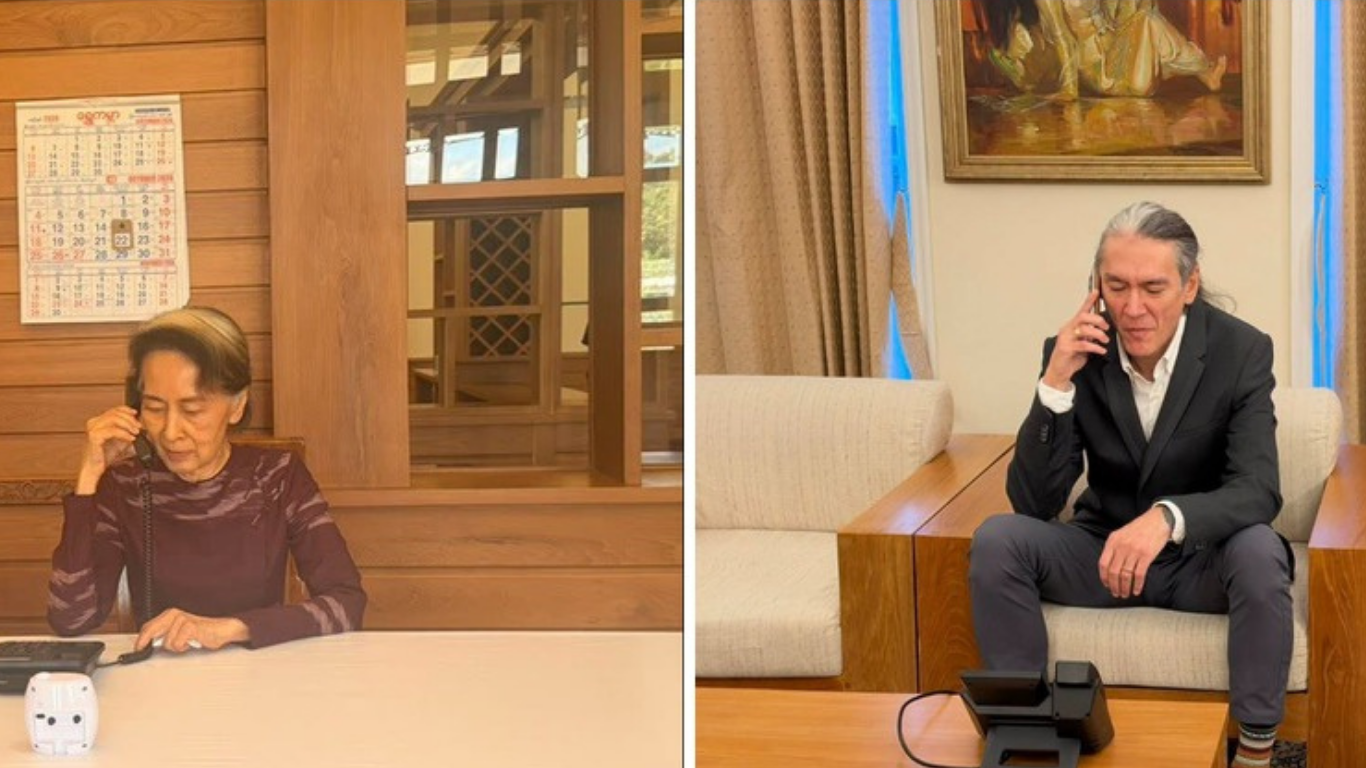
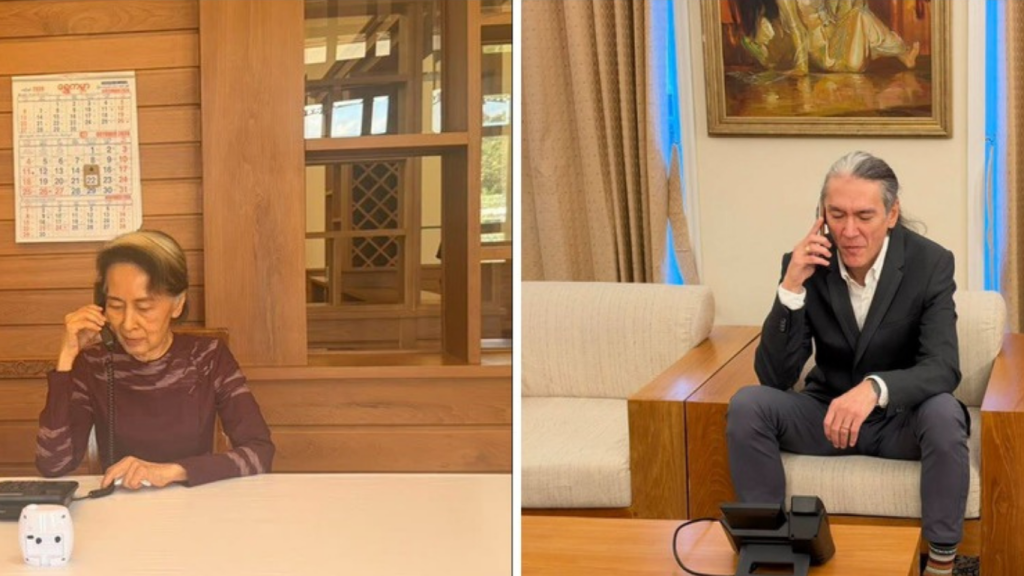
    Detained State Counsellor Daw Aung San Suu Kyi and her son, Kim Aris, speak by phone for the first time since the 2021 coup, 22 October 2026

    This Month in Ah Nyar: A Quick Overview

    • The military regime showed carefully staged gestures towards Daw Aung San Suu Kyi. They delivered two books sent by King Charles III together with a sealed diplomatic letter. She spoke with her son, Kim Aris, for about 20 minutes via the Myanmar Embassy in London.
    • Sub-national governments in Central Burma continued institution-building by the interim federal units. Meanwhile, the regime’s peace talks with a Naga armed group reopened a long-running territorial dispute in northern Sagaing. In Sagaing, the Human Rights Department held a three-day workshop and the NUG began investigating Mingin Township administrator and Pa Ka Pha leader over the alleged misuse of approx. 3.5 million USD. In Magway, the NUG handed administrative functions to the Interim Magway Federal Unit Government. In Mandalay, the NUG’s Central Committee for Interim Local People’s Administration held two meetings with the region’s People’s Administration Teams, and the Committee Representing the Mandalay Hluttaw met weekly.
    • The military junta concentrated its ground operations on trade corridors, notably the Mandalay–Shwebo–Monywa, Monywa–Kalewa and Kalay–Gangaw roads, and on recovering positions in Katha District. It increasingly relied on defectors as guides. It also prepared a two-pronged push on the Kalay–Gangaw road with Pyu Saw Htee militias from 12 villages. Raids and ambushes continued in Nyaung-U, Thabeikkyin and Myingyan.
    • KIA and PDF forces seized a strategic SNA base in Homalin Township on 23 October. Eagle Brothers resistance force captured Colonel Zaw Myo Tint near Sagaing on 18 October. Former BNRA fighters serving in a military column were captured on their way to Kanpetlet.
    • Airstrikes, paramotor and gyrocopter attacks killed civilians in Shwebo, Depayin, Butalin, Chaung-U, Kanbalu, Monywa and Indaw (Sagaing) and in Mindon (Magway). Among them was the 11 October bombing of the historic Maha Si Monastery in Shwebo. A mass grave of 12 men killed in 2023 was uncovered in Myaing Township. The gang rape of five girls by soldiers was reported in Natogyi Township.

    Politics

    The military regime announced that, between 10:40 and 10:50 a.m. on 19 October, its Ministry of Home Affairs officials met Daw Aung San Suu Kyi. They delivered two books sent by King Charles III, Soil to Table and Soil: The World at Our Feet, together with a sealed letter and a sealed diplomatic letter. Three days later, on 22 October, she spoke with her son, Kim Aris, for about 20 minutes via the Myanmar Embassy in London. The Ministry of Foreign Affairs framed the call as a humanitarian concession made under ICRC procedures and the coup leader’s special authority. Her remaining sentence was converted to detention at a “designated residence” on 30 April 2026. Some analysts have described the call as a political calculation by the regime.

    The SRA held its second conference from 28 to 30 September, with around 95 participants. Attendees included the NUG Acting President and the Arakan Army’s deputy commander-in-chief, while the NUG, AA, Women’s League of Burma, ABSDF and KNDF gave opening speeches. The conference established a Secretariat, adopted accountability policies including disciplinary action against members who commit war crimes, and reiterated that the coalition is “not only a military coalition but also a political alliance”. As the UN Credentials Committee prepares its decision, strike groups across Sagaing, including the Salingyi Township strike force, rallied under the slogan “Our Ambassador. Our Voice. Our Representative” in support of U Kyaw Moe Tun remaining Myanmar’s Permanent Representative.

    During Thadingyut, resistance units paid respects to the families of fallen comrades and lit candles at their graves.

    Sagaing

    Sagaing Federal Unit Interim Government continued to strengthen its administration and its ties with civil servants in October. On 1 October, Deputy Chief Minister Dr Aung Nay Win met members of the Sagaing CDM Civil Servants Council via Zoom. From 12 to 14 October, the interim government’s Human Rights Department held a three-day workshop with partner organisations to plan its internal development and future work. Sagaing NLD executive and central committee members also met the executive committee of the Sagaing CDM Civil Servants Council. Within resistance administration in Mingin, NUG formed an investigation committee into Mingin Township’s People’s Administration Team head, U Win Min Soe, and People’s Defence Team head, U Nyo Lwin. The investigation followed complaints that they had misused more than 15 billion kyat (approximately US$3.5 million).

    In northern Sagaing, the regime’s National Solidarity and Peacemaking Negotiation Committee (NSPNC) held talks with the NSCN-K (AM), a newly created faction of the Khaplang’s NSCN led by Ang Mai. Both parties discussed proposing to the regime’s parliament, under the 2008 Constitution, that more townships be added to the Naga Self-Administered Zone and that villages be upgraded to towns. The NSCN-K (AM)’s representative Chin Maung subsequently told press that the group asked for Hkamti (Sagaing) and Shinbwiyang (Kachin) to be included. It also said five border trade routes had been permitted, mainly linking Lahe to India, Nanyun to the Pangsaung Pass, and the Leshi area. The Shanni community has objected, as it did in 2020 when similar demands for Hkamti and Homalin were raised under previous governments (Shanni Voice; The Irrawaddy).

    Separately, on 4 October, the NUG Ministry of Defence’s Lahe Township People’s Defence Team (Pa Ka Pha) opened its new base in Lahe Township.

    Magway

    The NUG and the Interim Magway Federal Unit Government held a ceremony to transfer administrative functions to the federal unit. It builds on September’s developments, when the Magway Federal Unit Parliament passed a Defence Force Law and the Chief Minister reported working with the NUG to bring local People’s Defence Forces under Federal Unit command. It is not yet clear whether the federal unit has the revenue, personnel and security capacity to govern effectively under sustained military pressure, particularly in Pakokku and Gangaw districts.

    Separately, the Asho Chin Defence Force (ACDF), formed on 16 November 2021, renamed itself the Asho National Organisation/Asho National Army (ANO/ANA). The decision was taken at its conference of 20 to 24 September. The group cited its goals of building an “Asho Land” with guaranteed self-determination, establishing a federal democratic union and eradicating all forms of dictatorship. The group’s move towards becoming a national political-military organisation signals an explicit identity-based agenda. It is significant because the group operates in western Magway, along the border with Rakhine (Arakan) State.

    The now ANO/ANA is one of two Asho ethnic resistance groups active in Ngape and Sidoktaya townships. It has no military or political alliance with the other, CDF-Asho, and our security records show no operational cooperation between them. Instead, the group has built alliances with other resistance forces in Magway (PRA-Magway, Triangle 3T PDF, Myay Latt Bamar Defence Force, Galon People’s Defence Force, Minbu District Battalion No. 2, New Society Army and People’s Independence Army). More broadly, it is aligned with the Arakan Army in its backyard.

    The new formation raises an unresolved question about how Asho Chin claims to self-determination will fit within the emerging Magway Federal Unit, whose territory overlaps with Asho Chin communities. How the federal unit and the ANO/ANA handle jurisdiction, representation and command could become an early test of whether the resistance’s federal vision can accommodate ethnic minorities within Bamar-majority regions.

    Mandalay

    Committee Representing the Mandalay Hluttaw (CRMH) held three weekly coordination meetings (36/2026 to 38/2026), on 3, 10 and 17 October, to review the Hluttaw’s ongoing work and the sectoral committees’ reports. The 17 October meeting also included a session with the Hluttaw Representatives Vetting Committee.

    The NUG’s Central Committee for Interim Local People’s Administration held two meetings (20/2026 and 22/2026) with Mandalay Region’s People’s Administration Teams along with Mandalay Interim Governing Council (MIGC). At each, township People’s Administration Teams raised questions about coordinating administrative work, and officials from the relevant ministries responded. Attendees included Council chair U Myint Aung Moe, vice-chair U Aung Myo Latt and Council members. The Central Committee was represented by its permanent secretaries, deputy secretaries and joint secretaries, along with departmental officials. Members of township People’s Administration Teams from Mandalay Region also attended. Separately, MIGC Education Department issued a recognition statement on nine online schools for basic education.

    Security

    Sagaing

    From 30 September, two military columns totalling more than 450 troops advanced in a pincer movement along the Mandalay–Shwebo–Monywa road, guided by former resistance members who had surrendered. By 21 October, the offensive towards the Monywa–Kalewa road had lasted 177 days and left some 7,500 people from ten villages displaced. The military was also reported to be preparing an offensive to control the Kalay–Gangaw road. The main road connects Central Burma towards hilly Chin state and India. Pyu Saw Htee militia leaders and members from 12 Pyi Saw Htee posts from northen Gangaw and southern Kalay townships met two times at Hanthawaddy village on 26 October and at Myauk Khin Yan village on 31 October. In addition, the military junta gathered troops from the Tamu area of Kalay Township at Supply and Transport Battalion 934 in Kalay.

    On 18 October, local defence force the Linyone Nyi Naung (Eagle Brothers) guerrilla force captured Colonel Zaw Myo Tint, deputy operations commander of the No. 72 Armoured Operations Command, near the Kantalu checkpoint in Sagaing Township. The next day, about 250 troops entered western Sagaing Township, backed by an Mi-35 helicopter. Following the recent surrender of its 38 members, the Sadaung Thunder Defense Force (a local defence force based in Sagaing Township) dissolved and handed its weapons to the NUG. In Katha District, the military mounted operations near Kyaukmaw village to extract trapped military families and heavy fighting broke out in Indaw Township, where around 500 troops were deployed. In the north, KIA and PDF forces seized a strategic military and SNA base at Taung Oo village, Homalin Township, on 22 October after about 20 days of fighting. The SNA also clashed with resistance forces in Banmauk.

    Magway

    In Yesagyo Township, resistance forces attacked the Pyu Saw Htee post in Gway Cho village. Separately, a major Pyu Saw Htee leader from the post in Zee Taw village was killed in a resistance ambush in the same township. In Laungshe of Saw township, a Light Infantry Division 77 column from Defence Products Industry No. 25 of the military regime entered the town and one soldier was reportedly found hanged on the Laungshe bridge. On the Pauk–Myaing border, military columns suffered losses in fighting over the oil fields. Pakokku-based LID 101 deployed more troops in the area by dispatching a reinforcement convoy. On 21 October, a resistance member and a guard reportedly freed 13 prisoners of war captured at the Myitchay police station and defected to the military with weapons. 13 of them were later re-captured by the local defence force authority. In Seikphyu township, two frontline posts of the NUG Battalion 19 in Htainkan and Tamarchaung villages were attacked and local leaders including Bo Ma Htar were killed.

    From 17 October, the NUG’s Gangaw District Battalion 6 closed the Popa-kaing–Lephyu–Wekku road in Saw Township to cars and trucks for security reasons. Former Burma National Revolutionary Army (BNRA) fighters, now serving in a military column (of military junta), were captured alive by the joint resistance force as the column passed through Magway on its way to Kanpetlet in Chin State. The BNRA was a resistance group led by Bo Nagar who surrendered to the military junta earlier this year.

    In Mindon, resistance forces from Magway alongside Arakan Army fought against the military column advancing towards western corner of Magway connecting Magway towards Rakhine. The Arakan Army fought a military column for two consecutive days on the Ann–Mindon road, capturing prisoners and weapons.

    In junta-controlled Magway town, the junta organised a cohort of basic military training for university students, with plans reportedly extending it to middle and high school students. The training was reportedly conducted at the LIB 301.

    Mandalay

    In Mandalay Region, resistance forces kept up raids and ambushes on military posts and columns in Nyaung-U, Thabeikkyin and Myingyan townships in October. Meanwhile, the NUG’s local commands moved to tighten control over arms, military activity and training in their areas.

    On 11 October, the Popa Guerrilla Force and allied PDFs raided a temporary military post on the Byatta Panset Road in Nyaung-U Township. On 24 October, resistance forces attacked military outposts between Tagaung and Tigyaing on the Mandalay–Tigyaing–Bhamo Road in Thabeikkyin Township. In Myingyan Township, the Taloke PDF ambushed two military columns north of Taloke town on 28 October, reportedly killing at least ten soldiers. The attack is a recent sign that resistance forces can still contest military movements in the area. Separately, the commander of the NUG Ministry of Defence’s Myingyan District Command banned arms trading in the district and warned of severe penalties. The ban points to concern over the unregulated circulation of weapons but details should be further monitored.

    In Madaya Township, PDF Pyin Oo Lwin District Battalion 1 announced that all military or other operations in the township must be notified to it in advance. In neighbouring Singu Township, the local PDF graduated its sixth basic military training batch on 11 October.

    Human Rights

    In October, the Tatmadaw continuously conducted airstrikes against civilians and property in townships of Central Burma, including Chaung U, Butalin, Kanbalu, Yesagyo, and Myaing townships, where local resistance forces are active. Among them, the massacre cases, involving six people’s deaths, are recorded in airstrikes on gold-mining rafts in the Thaphanseik Dam area, western Kyunhla township, Sagaing Region.

    The historical sites and religious buildings are damaged due to aerial attacks. For instance, on 11 October 2026, at approximately 12:00 p.m., the Myanmar military carried out an airstrike on the historic Maha Si Monastery in Seik Khun village, Shwebo township, Sagaing Region, while displaced civilians from western Shwebo were observing religious precepts on a Buddhist Sabbath Day (Uposatha Day). According to the Shwebo People’s Defence Team (Pa Ka Pha), two displaced civilians died while receiving medical treatment, and at least eight others were injured.  

    Those attacks involved paramotors, gyro-copters, and suicide drones used by the Tatmadaw in different townships of Sagaing. Forms of repeated aerial attacks were recorded in October, for instance, in Butalin township. The victims include the same family members in Depayin township due to a paramotor that flew from the North-western regional command on October 8, around 1:00 pm, according to local sources. A day later, in Nyaung Pa Hto village, a similar aerial attack resulted in two people, including a 24-year-old disabled man, being injured.

    In Magway, according to our monitoring information, civilians are targeted by aerial attacks in areas such as Myaing, Yesagyo, Mindon and Seikhypu. The daily attacks near the oil fields in the township of Myaing were frequent as part of Tatmadaw’s strategy to control the territory for the sake of political economic interests. In addition, after over three years, evidence of mass killings was uncovered on October 4 in Gway Kone village, Myaing township. The twelve men were extrajudicially killed after being arrested by LID 101 on June 9, 2023, after being taken hostage, according to local sources. The local aid group collected the personal belongings, the national identification card, as well as skeletal remains at the incident site.

    Moreover, Tatmadaw’s arbitrary cases, including porter and conscription, are reported in Salin township. The military authorities targeted young people and imposed a curfew within the territory on Sep 22.  Similar forms of arrests under conscription against youths were carried out by Thida Yu Mon paramilitary forces of the Tatmadaw in Myingyan township, Mandalay. Locals reported that families of the youth in Myingyan were forcibly asked to give money ranging from 30000 MMK to 100,000 MMK for the youth migrants, depending on the country they migrated to.

    Conflict-related sexual violence also happened in the village of Natogyi township, Mandalay. Five young girls were subjected to gang-rape by the column of Tatmadaw forces on October 5. Most of them are sisters within the family, according to our team’s investigation. The survivor girls are in critical need of mental support.
  • What is Happening in Ah Nyar? September, 2026 [Issue 9/2026]

    What is Happening in Ah Nyar? September, 2026 [Issue 9/2026]

    What is Happening in Ah Nyar? September, 2026 [Issue 9/2026]

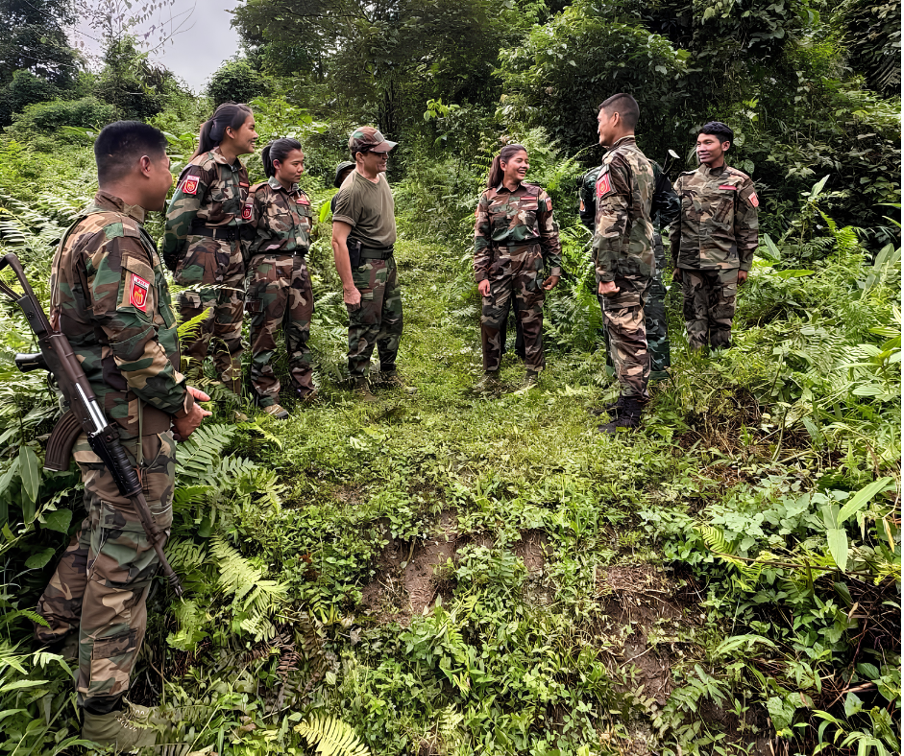
    NUG Minister Dr. Zaw Wai Soe meets resistance fighters on the frontline. (Photo: Zaw Wai Soe/Facebook)

    This Month in Ah Nyar: A Quick Overview

    • Political developments featured parallel processes, including NSPNC–MNDAA talks on political participation, internal changes within the USDP and continued efforts by federal and opposition actors to strengthen alternative political arrangements. Sagaing, Mandalay and Magway were formally confirmed as members of SCEF.
    • Military activity remained concentrated around strategic road and river corridors in Sagaing. The military reportedly expanded positions along the Monywa–Ya Gyi–Kalewa and Kalay–Tamu roads, while fighting continued along the Irrawaddy River.
    • Major military operations continued around Pakokku and Gangaw, alongside intermittent guerrilla attacks elsewhere in Magway. Fighting intensified around the Myaing oil fields, while military columns also advanced from Laungshwe toward Kanpetlet of Yaw.
    • Drone attacks targeted Tada-U Air Base, with the NUG reporting damage to two YAK-130 aircraft in Mandalay. Military forces also reportedly redeployed troops around Madaya, while guerrilla attacks and resistance training continued in southern Mandalay.
    • Aerial attacks remained a major concern across Ah Nyar, with Magway and Sagaing recording high numbers of reported airstrikes. September also saw reported killings in several townships, including attacks affecting civilians, religious figures and local communities.

    Politics

    Political developments during the month reflected several parallel processes, including engagement around the military-led political process, internal developments within established political parties, and continued efforts by opposition and federal actors to develop alternative political arrangements.

    The NSPNC of the military junta held talks with the MNDAA in Naypyidaw, reportedly including discussions on the MNDAA forming a political party and participating in the election. The Central Working Committee of the NLD also called for meaningful political dialogue involving political and ethnic forces and other stakeholders, alongside reducing violence and releasing political prisoners including Daw Aung San Suu Kyi.

    On the USDP, the military-backed political party temporarily suspended its party conference amid reported internal disputes over the election of its executive leadership. The conference subsequently concluded with Khin Yi being re-elected as party chairman, while Min Aung Hlaing’s preferred candidates were reportedly not elected to the party’s top executive positions. The USDP also confirmed that Min Aung Hlaing had become a party member.

    Meanwhile, Sagaing Federal Unit, Mandalay Region and Magway Federal Unit were formally confirmed as members of SCEF under its State/Federal Unit/ERO representation pillar. The NUG also continued efforts to strengthen internal coordination, while the military-led parliament reportedly established the Myanmar Parliamentary Union (MPU).

    Sagaing

    In Sagaing, political and administrative developments focused primarily on strengthening interim governance capacity. The NUG Ministry of Home Affairs, Sagaing Federal Unit Ministry of Home Affairs, and the Mingin Township People’s Administration Team jointly organised a five-day refresher training on interim public administration, attended by more than 100 ward- and village-level administrative officials. The training covered interim administration and capacity building, conflict resolution, emergency security and disaster management, administrative procedures, and rule-of-law-related processes. Sagaing Federal Unit was also confirmed as a new member of the Federal Democratic Union Leading Council (SCEF), together with the Mandalay Region and Magway Federal Unit, under the council’s State/Federal Unit/ERO representation pillar.

    Magway

    In Magway, political developments centred on the institutional consolidation of the Interim Magway Federal Unit Government and its coordination with the NUG. Magway Federal Unit Parliament enacted a Defence and Security Law, which provides a legal basis for the Federal Unit to establish its own parallel security arrangements alongside the NUG. The Parliament also enacted the Magway Federal Unit Attorney General Law during its 12th regular session, further expanding the Federal Unit’s institutional and legal framework. The Interim Magway Federal Unit Government released its six-month activity report. Chief Minister Dr Ye Htun Zaw also reported ongoing coordination with the NUG to bring People’s Defence Forces (PaKaPha) operating within Magway under the command structure of the Federal Unit Government. The Magway Federal Unit was also confirmed as a new member of SCEF.

    Mandalay

    In Mandalay, the main political development was the formal inclusion of the Mandalay Region in SCEF. No further developments concerning the division of competencies between the NUG and the MIGC were reported this month, although human rights focal persons from Mandalay, formerly under the NUG Ministry of Human Rights, met with the MIGC. Separately, the Mandalay Regional Hluttaw met with the Mandalay Civil Disobedience Movement Organisation (MCDMO) to exchange updates on legislative work, CDM support, political prisoners, and assistance provided during the Sagaing floods.

    Security

    Sagaing

    Military activity in Sagaing remained concentrated around strategic transport routes and river corridors. Along the Monywa–Ya Gyi–Kalewa road, an important route connecting to India–Burma border trade, the military reportedly expanded checkpoints, with new checkpoints being established at intervals of approximately three miles (Mandalay Free Press). The road had reportedly remained under resistance control since late 2022, before the military began renewed operations to regain access following the Thingyan period and reportedly reached sections of the route in June. Military positions were also reportedly expanded along the Kalay–Tamu Road, another important India–Burma trade route.

    Military and resistance activity also continued along the Ayeyarwady River corridor. Reports indicated repeated KIA attacks on military vessels transporting supplies and equipment to Bhamaw. Several military and cargo vessels were reportedly damaged or sunk, while only one supply vessel was reported to have reached Bhamaw. As of 9 September, resistance groups destroyed 13 military and cargo vessels, according to a local media report.

    In Wetlet Township, a military column comprising LID 33 forces, Mingun-based Pyu Saw Htee forces, and Infantry Battalion 12 reportedly conducted operations along the eastern bank of the Irrawaddy River. At least 15 clashes were reported over a seven-month period. According to an announcement by Resistance Battalion 2 of Shwebo District, at least 100 military personnel were reportedly killed during the clashes, while resistance forces also claimed to have seized weapons and ammunition. Meanwhile, guerrilla attacks were also reported on the main road connecting Monywa and Sagaing.

    Magway

    Major military operations and resistance activities continued in the two major zones of Pakokku and Gangaw districts, while intermittent guerrilla attacks were widely reported across other districts on the eastern bank of the Irrawaddy River. In Myaing Township, military forces reportedly destroyed oil wells in the Kyauk Khwet oil field, with four wells reportedly burned or destroyed in early September. Local sources also reported further destruction of oil wells and other structures in the area during the month. The Naypyidaw regime claimed that at least 800 oil wells across Myaing and Pauk townships had been destroyed during its operations in the area.

    The Ah Nyar–Tamar resistance coalition is actively confronting Tatmadaw forces from LID 101 and LID 99 in the region, with major clashes reported across several villages surrounding the oil fields.

    In Gangaw district (locally known as Yaw), a combined military column of approximately 300 troops from KaPaSa 25 reportedly entered the area from Laungshwe in September. Six newly conscripted soldiers reportedly fled from the column between Laungshwe and Taungbo Gyi and remained at large.

    Later in the month, a military column of more than 500 troops led by a commander from LID77 reportedly entered Laungshwe on 23 September and began advancing toward Kanpetlet Township in southern Chin State from 26 September, with reported air support. Subsequent reporting indicated that resistance forces had intercepted the column as it advanced toward Kanpetlet.

    Other resistance operations were reported in Natmauk, Minbu, Taungdwingyi, and Sinbaungwe. These included attacks on military columns, security personnel, and military-linked vehicles. On 19 September, a resistance drone unit reportedly attacked a military convoy of 185 vehicles travelling along the Salin–Kanpya road.  

    Mandalay

    The Ministry of Defence of the NUG reported that its drone units carried out targeted attacks on areas where YAK-130 military aircraft were stationed at Tada-U Air Base, reportedly damaging two aircraft. During related ground clashes, the NUG MOD also claimed that five Tatmadaw personnel, including Colonel Myo Hlaing Oo from Air Defence Battalion No. 7, were killed. Three resistance fighters were also reported killed during the operation.

    No military movement was observed in upper Mandalay – areas where Operation 1027 controlled. In central Mandalay, military forces reportedly redeployed part of their troops from positions east of Madaya Township to Madaya town, following the reported reassertion of military control over the eastern part of the township. Local sources said that troops were withdrawn from positions around Satetaw Gyi, Kyauk Seik Lay, Ingyin Myaing, and Kin villages and concentrated in Madaya town, while substantial forces reportedly remained in those areas.

    In southern Mandalay, intermittent guerrilla attacks were reported in Myingyan District, alongside military training organised by the NUG Ministry of Defence for Resistance Battalions 4 and 10.

    Human Rights

    ISP Myanmar reported that, after General Ye Win Oo took charge as commander-in-chief, over 1580 aerial attacks were conducted nationwide. Among them, Magway recorded the highest number of aerial attacks between March and August 2026, with over 320 attacks, while over 240 aerial attacks occurred in Sagaing.

    Amid increasing militarisation and efforts to assert territorial control, Tatmadaw forces used drones not only for reconnaissance but also to carry out attacks targeting people, including through explosive-laden drones, in Magway, Sagaing, and Mandalay. Our investigation team recorded that one LGBT person, over 60 years old, was killed by Tatmadaw drone attacks against the football playing field in Taung Ywar Ma village, Seikphyu township, Magway. Another woman and three male villagers were injured. Most victims were odd-job and seasonal workers who had gone there to watch the football match.

    In addition, in September, massacre incidents involving the deaths of at least five people occurred in townships such as Mindon, Ye-U, Indaw and Ngazon. Local sources reported that Tatmadaw naval personnel involved in aerial attacks were rewarded for carrying out such deadly operations, which are often seen as an indicator of their ability to accurately hit targets. Monks, lay attendants (locally known as kappiya), and alms-givers have also been among those killed in attacks across Central Burma. One incident, among others, was that on September 6, five people, including a monk, were killed in airstrikes by the Tatmadaw in Min Gyoe village, Ngazon township, Mandalay.

    On-the-ground operations through raids were recorded in the villages located between Chaung U and Monywa townships in Sagaing, as well as the villages along the Seikphyu-Saw road from Magway. Patterns of human shields, shooting, extrajudicial killings and burning homes were committed by the column of the Tatmadaw raids, according to local sources.

  • What is Happening in Ah Nyar? August, 2026 [Issue 8/2026]

    What is Happening in Ah Nyar? August, 2026 [Issue 8/2026]

    What is Happening in Ah Nyar? August, 2026 [Issue 8/2026]

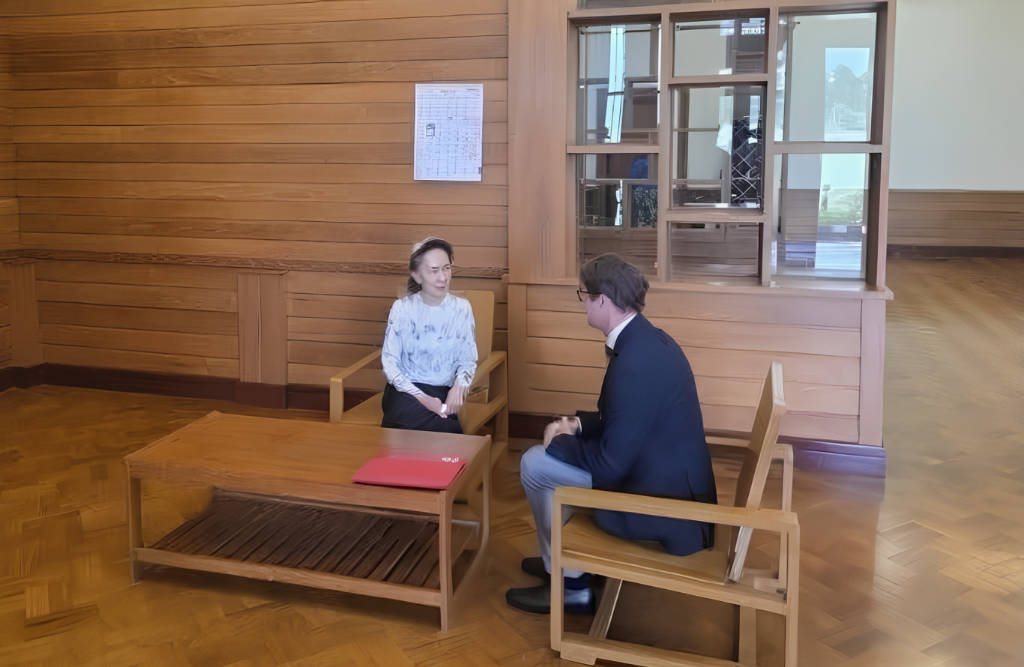
    ICRC visited State Counsellor Daw Aung San Suu Kyi (Photo: internet)

    This Month in Ah Nyar: A Quick Overview

    • Sagaing and Mandalay formally joined SCEF, while coordination among the three federal units and with national-level institutions continued.
    • ICRC Representative of Burma visited State Counsellor Daw Aung San Suu Kyi.
    • Resistance forces expanded military coordination, while junta forces continued offensives, reinforcements and airstrikes to regain strategic positions.
    • Airstrikes, village raids, arbitrary arrests, looting and arson continued across Ah Nyar, with civilians bearing the main burden of the conflict. The airstrike on a meditation centre in Myaung killed at least 16 people and injured more than 30, highlighting the continuing vulnerability of civilian spaces
    • Sagaing flood directly affected at least 177,700 people in at least 10 Sagaing townships, while restrictions on relief efforts compounded the crisis.

    Politics

    With the rise of discussions around the Steering Council for the Establishment of a Federal Democratic Union (SCEF), political debate appears to have become more prominent than institutional building, in contrast to the institution-building processes observed last month across the three units of central Burma. These political developments also coincided with the recent visit by the ICRC Burma representative to State Counsellor and NLD Chair Daw Aung San Suu Kyi, during which the ICRC stated that the visit “included the opportunity to speak with Daw Aung San Suu Kyi in private.”

    Following these discussions, Sagaing and Mandalay officially joined SCEF, a political and military alliance involving the NUG, KIO, KNU and their partners. Discussions with Magway remain ongoing.

    This month also saw increased horizontal coordination among the three federal units, alongside greater engagement with the Committee Representing the Pyidaungsu Hluttaw (CRPH). This can be understood as complementary to the ongoing discussions on the Division of Competencies (DoC) with the NUG, particularly regarding future administrative transitions. At the same time, the continued negotiations point to unresolved questions over representation, authority, and the relationship between federal-unit institutions and national-level actors.

    More consequential developments, however, may be emerging at the administrative level. In Magway and Sagaing, federal-unit governments continued coordinating with NUG structures and township administrations, while Mandalay openly discussed the division of competencies between the NUG and the region in higher education. These developments suggest that federalism is increasingly being negotiated through everyday governance and the exercise of administrative authority, rather than through constitutional and political declarations alone.

    Magway’s federal-unit government also announced the establishment of a public complaints mechanism and the creation of a human rights department under the Deputy Chief Minister’s Office.

    The central political question emerging from August is therefore not simply whether Ah Nyar is developing alternative institutions, but whether these increasingly numerous institutions can establish a coherent division of authority and a shared federal political framework without reproducing political and institutional fragmentation.

    Security

    The security landscape was characterised by persistent territorial contestation, increasing coordination among resistance forces, and continued military efforts to regain strategically important positions. The coordinated military column operating in Myaing and Pauk townships, led by LID 101 and LID 99, was reportedly reinforced by infantry troops from the 14th Military Operations Command based in Mong Hsat, eastern Shan State. The operation has been heavily supported by airpower, including aerial bombardment and fighter-jet strikes, as explored in our recent analysis of the situation. By 8 August 2026, the military column had reportedly raided at least 31 villages across Myaing and Pauk townships. More recently, reports indicated that a Tatmadaw column was approaching the Well No. 2 Oil Field near Kyauk Khwet village in Myaing Township, suggesting an ongoing effort to regain strategically important economic and territorial positions.

    In response, the resistance alliance’s “Ah Nyar Tamar Operation” has continued to confront military forces in areas under the command of the Magway Federal Unit’s Ministry of Defence. Fighting also continued in Minhla and Mindon townships, where reported military reinforcements point to the strategic importance of the routes connecting Magway and Rakhine. The United States of Burma Army, which is active in the area, also reported armed clashes beginning around 20 August. Beyond these frontline clashes, August also saw targeted killings of resistance-linked actors. A central committee member of the Chinland Defence Force (Kalay, Kabaw and Gangaw), along with two other individuals, was reportedly assassinated by gunmen who subsequently joined a Tatmadaw military base in Gangaw Township. Separately, the commander of the Chin Defence Force–Asho was reportedly killed in an ambush by junta forces in western Magway.

    Sagaing similarly experienced a mixture of resistance advances and increased military pressure. Resistance forces reportedly captured a strategically important military position between Indaw and Katha, while fighting and military restrictions continued in areas including Mingin, Yinmabin and Sagaing. The reported use of airstrikes during flooding, alongside arrests, forced recruitment and movement restrictions, further demonstrates how military pressure continues to extend beyond conventional frontline engagements. In Myaung Township, Sagaing Region, a junta field commander was reportedly assassinated inside the town, and resistance forces subsequently seized his mobile phone, potentially providing intelligence on the junta’s local operations and networks.

    In Mandalay, resistance forces continued to target military positions around Myittha, Meiktila, Myingyan and Kyaukpadaung, including the reported capture of a military outpost in Myingyan. At the same time, military and allied forces continued operations against civilian communities and resistance-held areas.

    On resistance coordination, four resistance groups, including the Rocket Fighter Column of the Magway Regional People’s Security Team under the NUG, formally announced the formation of a military alliance. At the local level, there were also signs of growing operational coordination, including joint operations among resistance groups in Mandalay and increased cooperation between different forces in Magway.

    The overall pattern suggests a protracted contest rather than a clear military turning point. Resistance forces appear increasingly capable of coordinating operations and contesting military positions, but the military continues to compensate for territorial vulnerabilities through reinforcement, airpower and coercive control of civilian movement.

    Human Rights

    The humanitarian situation in Central Burma has further deteriorated as flooding and ongoing military operations place a double burden on conflict-affected and displaced communities. According to our monitoring data regarding floods in Central Burma, over 177,700 people have been directly affected in at least ten townships of Sagaing, including Ye-U, Khin U, Taze, Myaung, and Wetlet townships. However, Tatmadaw authorities have also restricted emergency relief and rescue efforts in flood-affected areas. In Sagaing, for instance, local sources reported that people has been stopped and checked from carrying relief supplies at the Sagaing Bridge (Yadanarpon Bridge), locally known as Hna Pauk. 

    Amid such natural disasters, multiple aerial attacks of Tatmadaw continue against civilians. NUG has stated that, from 8 August to 23 August, over 240 airstrikes occurred nationwide, in which Magway and Sagaing were mostly targeted. In Sagaing, during August, attacks on civilians were recorded in Chaung U, Kani, Khin U and Myaung townships, among others. Among deadly aerial attacks, the massacre case was recorded in Myaung township. Tatmadaw conducted airstrikes twice around 9:00 am on 21 August, targeted at Buddhist meditation centre located in Hswe Lae O village, Myaung township.  Our investigation has recorded that the attack resulted in the deaths of 14 people at the scene, and over 30 were injured. Most are male elderly meditators, according to locals. Two people, including a 16-year-old boy, were dead with heavy injuries after the attacks. The attack may have been retaliatory following the killing of a Tatmadaw officer in Myaung on 17 August, although this connection requires further verification.

    In addition, since early August, Tatmadaw’s on-ground operations have continued to expand in Magway, Sagaing and Mandalay. Common patterns of arrests, torture to death, hostages, looting civilian properties, and burnings are widely seen as junta strategy in frontline battles. Such forms of violations were recorded in villages of Seikphyu,  Chauk and Myaing townships in Magway, the villages of Kani and Yinmarbin townships in Sagaing, as well as the villages of  Nyaung U and Taung Thar townships in Mandalay. 

    In urban areas controlled by the Tatmadaw, local sources reported arbitrary arrests under the pretext of conscription in Kalay, Monywa and Salin. These arrests were followed by extortion, with families asked to pay money for the release of those detained, according to local sources. In Salin township, for example, 16 young men aged 25–35 were arrested on August 16 by Light Infantry Battalion (LIB) 253, stationed in Salin. Local sources reported that the junta intensified conscription recruitment for batch 28 that will begin in September.  

  • What is happening in Ah Nyar? July 2026

    What is happening in Ah Nyar? July 2026

    What is Happening in Ah Nyar? July, 2026 [Issue 7/2026]


    Politics

    During July 2026, political developments in Central Burma were characterised by continued progress in resistance governance and institution-building, particularly in Sagaing and Magway. The Sagaing Federal Unit Parliament enacted the Interim Defence and Security Council Law, which subsequently drew criticism from the Civil Disobedience Movement Council, a representative bloc within the Sagaing Federal Unit Government. The CDM Council argued that the law was inconsistent with federal democratic principles and the interim constitutional framework. During the same period, the parliament confirmed the appointment of the Chief Justice and judges. This marked a further step in establishing the federal unit’s judicial institutions, while the division of authority between the Ministry of Justice of the NUG and the Sagaing Federal Unit Government is gaining momentum. NUG’s justice minister U Thein Oo held a meeting with key political stakeholders from Sagaing on the transition.

    The Deputy Chief Minister of the Sagaing Federal Unit Interim Government conducted a field visit to Khin-U Township, where he met with the Township People’s Administration Team, Township MP Dr Win Aung and sectoral administrative leaders. Although the government did not disclose details of the discussions, the meeting reflected ongoing coordination between the federal unit government and township-level governance structures. In addition, the National League for Democracy convened a working coordination meeting of executive committee members from its township and regional branches across the Sagaing Federal Unit.

    At the political dialogue level, both the Sagaing and Mandalay Federal Units endorsed the first draft of the Common Political Agreement (CPA) of the National Unity Consultative Council.

    In Magway, the interim government expanded its defence structures by establishing additional temporary military columns in response to intensified military offensives. During July, the Magway Federal Unit Government added five new military columns to its existing four. According to official statements, the sub-national government consolidated local defence forces across Magway into military columns under the leadership of former Pa Ka Pha (locally acronym for People’s Security Team of the NUG) leader Bo Let Yar of Myaing Township.

    Meanwhile, the NLD reiterated that Daw Aung San Suu Kyi’s participation remains indispensable to any political resolution in Burma. In a separate joint statement marking her 81st birthday, political stakeholders from Central Burma urged ASEAN and the international community not to legitimise or prematurely engage with the military junta, warning that such actions would prolong Myanmar’s political crisis and armed conflict. The statement also called for the unconditional release of Daw Aung San Suu Kyi and all political prisoners as a prerequisite for an inclusive and peaceful political settlement.

    Security

    This month, major battles were reported across north-western Magway (Myaing, Pauk, Saw and Tilin Townships), the Kalay–Kabaw area of Sagaing (Kalay and Tamu Townships) and upper Sagaing (Mingin, Kantbalu, Kawlin and Katha Townships). Meanwhile, frequent aerial bombardments by the Tatmadaw and guerrilla attacks by resistance forces were reported across southern Mandalay (Natogyi, Myingyan and Taungtha Townships), as well as several townships in Sagaing and Magway.

    In north-western Magway, the Tatmadaw infantry columns comprising LID 101 and LID 99, supported by Pyu-Saw-Htee (locally acronym for the paramilitary wing of the Myanmar military), intensified ground offensives in Myaing and Pauk Townships. Several media reports confirmed that at least 26 villagers were killed by the columns during their raids. At least 25 villages were displaced. Resistance forces claimed that a military column became encircled in western Myaing Township, prompting the Tatmadaw to launch more than 120 airstrikes within four days in an apparent effort to support its ground troops. Fighting also intensified around the Myaing oil fields, where resistance groups warned that the military was attempting to destroy oil infrastructure if it could not regain control of the area.

    The Yaw region (of western Magway) remained another major theatre of conflict. Resistance forces, including the Arakan Army, reportedly coordinated with local resistance groups to repel Tatmadaw offensives in Saw Township. The Magway Regional Military Command of the People’s Defence Force reported capturing nine Tatmadaw soldiers and seizing weapons during the fighting. At the same time, the Tatmadaw relied increasingly on aerial logistics, using transport aircraft to airdrop weapons, ammunition and supplies to forward-deployed troops in Saw and Tilin Townships while conducting aerial reconnaissance over strategic locations.

    In the Kalay–Kabaw corridor, clashes intensified along the Asian Highway linking Kalay and Tamu, prompting resistance authorities to warn civilians to relocate temporarily to safer areas. The Tatmadaw also announced that it had recaptured Kanan Village near Khampat. The contestation continued over strategically important transport routes along the India–Myanmar border.

    Elsewhere, resistance forces continued guerrilla operations targeting military bases, police stations, checkpoints and military convoys across Magway and Mandalay Regions. The attacks were reported in Natmauk township, Chauk township, Min-bu township, Sinbaungwe township, Magway township,  Aunglan township of Magway region and Mahlaing township, Madaya township, Nyaung-U township, Natogyi township of Mandalay region. Several attacks reportedly resulted in casualties among Tatmadaw personnel, the seizure of weapons and ammunition, and the temporary capture or destruction of military and police outposts. In southern Mandalay, resistance forces also targeted military facilities supporting air operations, while clashes continued around Madaya and Malaing Townships.

    Across Sagaing, the Tatmadaw maintained extensive aerial operations and artillery attacks against civilian-populated areas while continuing efforts to regain territory in upper Sagaing. Airstrikes in Sagaing Township, Wetlet Township and other areas reportedly killed civilians and damaged homes, schools and other civilian infrastructure. Simultaneously, the military claimed to have re-established control over several villages in Indaw Township, which reflected ongoing efforts to secure key transport corridors linking Sagaing with Kachin State.

    Human Rights

    The human rights situation in Central Burma has deteriorated further, while civilian casualties and displacement figures have increased due to repeated airstrikes by the Tatmadaw against single targets, in Pauk, Myaing townships among others. It was obvious after the political transition to a new military commander, Ye Win Oo, according to the ACELD report, on 27 July 2026. From mid-June to late July, the diversification strategy of Tatmadaw forces involved using multiple airstrikes and continuous raids in north-western villages of Myaing township resulting in massacres of civilians and torture to death, while five bodies were burnt alive in Baw Ton village.

    In addition to physical violence, military operations continued to rely on tactics intended to terrorise civilian populations, including burning homes, looting civilian properties, as well as destruction of historical religious sites. The attack is no longer confined to active frontlines but increasingly affects civilians in their homes, farms, and public spaces. That was reported in the incident where an elderly man was killed while herding cattle after artillery attacks struck Hta Naung Kaing Lay village, Khin U township, Sagaing, on 30 July.

    Alongside such conventional tools, Tatmadaw continued to expand its use of drones during military operations for aerial surveillance and reconnaissance to monitor the movements of resistance forces and support ground offensives before the forces entered villages. In July, military drone activity was reported in Singu, Chauk, and Saw townships, including drone-delivered attacks. The growing use of drones has increased the risk of civilian casualties, including the death of a three-year-old boy.

    Furthermore, in urban areas controlled by Tatmadaw forces, since 21 July, digital surveillance through the Person Scrutinisation and Monitoring System (PSMS) has been used to verify the identities of persons linked to the Civil Disobedience Movement (CDM), political activists, and those eligible for compulsory military service, thereby restricting freedom of movement. In some cases, local authorities under Tatmadaw engaged in extortion by manipulating conscription lists and demanding payments at checkpoints in Magway further increasing the financial burden of civilians.


  • What is Happening in Ah Nyar? June, 2026 [Issue 6/2026]

    What is Happening in Ah Nyar? June, 2026 [Issue 6/2026]

    What is Happening in Ah Nyar? June, 2026 [Issue 6/2026]

    Resistance groups seize Pyu-Saw-Htee post in Pauk Township (Photo: Ah Nyar Myay Military Alliance)

    This month in Ah Nyar: A Quick Overview

    • Ethnic territorial and governance disputes intensified as the Shanni Self-Administered Region proposal drew opposition from the Kuki community, while the NUG and Sagaing, Magway and Mandalay continued negotiations on the division of competencies.
    • Armed conflict escalated across north-western Magway and the Kalay–Kabaw corridor, with the Tatmadaw regaining Khampat and resistance forces sustaining coordinated operations in Magway. Inter-factional tensions among resistance groups also increased in Mandalay and Sagaing.
    • Renewed military offensives along the India–Burma Friendship Road triggered fresh displacement, particularly around Khampat and Yarzagyo in Sagaing Region.
    • Reports documented extrajudicial killings, attacks on civilians, destruction of cultural and religious sites and continued burning of villages, while accountability challenges persisted in conflict-affected areas.
    • Pro-democracy groups renewed calls for proof of life and the release of Daw Aung San Suu Kyi, while peaceful symbolic protests continued across central Burma despite ongoing conflict.

    Politics

    The Shanni Nationalities Army held talks with representatives of the Naypyitaw regime and proposed the establishment of a Shanni Self-Administered Region covering townships in upper Sagaing Region and parts of Kachin State. In response, the United Kuki State Council issued a statement rejecting the proposal, stating that it includes ancestral Kuki territories in Homalin, Hkamti, Kale and Tamu Townships in northern Sagaing Region.

    The Central Committee for Naga Literature and Culture established a Peace, Stability and Negotiation Committee to engage in dialogue with six Naga armed groups operating in the Naga Self-Administered Zone. The groups reportedly include factions of the National Socialist Council of Nagaland, the Naga National Council and the Eastern Naga National Organisation. The initiative is widely interpreted as part of Naypyitaw’s strategy to consolidate stability and pursue negotiated arrangements in the Naga SAZ. However, it excludes the Naga People’s Defence Organisation and the Naga People’s Defence Force. Sagaing, Magway, and Mandalay continued discussions with the National Unity Government (NUG) on the division of competencies, reportedly focusing this month on humanitarian affairs. The parties also agreed on a transition plan for governance mechanisms in Sagaing. Pro-democracy groups, including the National League for Democracy, elected parliamentarians and strike committees, renewed calls for the military regime to provide proof that State Counsellor Aung San Suu Kyi is alive and to secure her immediate release.

    Resistance Movement

    The security landscape this month was characterised by an escalation of armed conflict in north-western Magway Region and the Kalay–Kabaw area of Sagaing Region, alongside increased tensions between National Unity Government security forces and local resistance groups, particularly the People’s Liberation Army in southern Mandalay Region. In Magway Region, sustained pressure on military positions was observed particularly across north-western Magway. The local resistance forces announced Operation Su targeting frontline military posts in Seikpyu, Pauk and Pokokku townships. The resistance groups announced that they had captured Pyu-Saw-Htee militia members and Tatmadaw soldiers while taking control of Kokkosu Village in Pauk Township. Resistance forces also claimed to have shot down a military helicopter during operations in the region. In Pakokku Township, near the Tatmadaw’s Light Infantry Division 101 headquarters, resistance groups reportedly seized the Myit Che Police Station. Similar attacks targeting police station in Saw Township were also reported. In Yesagyo Township, the People’s Defence Team of Yesagyo launched an attack on a Tatmadaw unit on the outskirts of Yesagyo Town. In Natmauk Township, resistance groups reportedly captured the Padauk Ngote Pyu-Saw-Htee outpost. Guerrilla attacks were also reported in Taungdwingyi and Seikphyu townships.

    In the Kalay–Kabaw area of Sagaing Region, Tatmadaw launched a major offensive and reportedly regained control of Khampat Town, which had been under National Unity Government control since 2023. Fighting continued throughout the month as Tatmadaw ground forces advanced along the Kalay–Tamu corridor in an apparent effort to re-establish control over the strategic road linking Kalay to the India–Burma border trade zone at Tamu. The renewed offensive triggered significant displacement, particularly from Yarzagyo Village and Khampat Town along the India–Burma Friendship Road. A Tatmadaw column under the Monywa-based Northwestern Regional Military Command launched operations against resistance strongholds in Chaung-U Township. Clashes were reported as the military advanced through the area. Following the fighting, Tatmadaw forces reportedly burned approximately 250 houses in Sin Myay, Nga Lone Tin and Hman Cho villages after suffering an estimated 20–30 fatalities in engagements with resistance forces. 

    In Mandalay Region, resistance activity remained concentrated in the southern townships of Natogyi, Myingyan and Taungtha. The People’s Defence Team of Natogyi Township announced that it had attacked a Tatmadaw column conducting village raids in Natogyi Township. Inter-factional tensions among resistance forces persisted during the month. In southern Mandalay Region, National Unity Government forces reportedly raided positions held by the People’s Liberation Army in Taungtha Township, in what observers viewed as part of the NUG’s broader effort to consolidate command and control over resistance forces in central Burma. Similar tensions were reported in Sagaing Region, where NUG infantry battalions reportedly raided bases of the People’s Security Team in Monywa. Separately, Pale Maung, a battalion commander of the NUG, was reportedly shot dead by the Personal Assistant to Swan Thu Maung, the District Commander of Yinmarbin District.

    Justice and Human Rights

    In June, Tatmadaw’s atrocity crimes were recorded in several townships, such as Myit Che, Chaung U, and Pakoku among others. In Mandalay, the column of Tatmadaw forces from Infantry Battalion 415 based in Nyaung U has reportedly raided the villages in Myit Che, since May 12, according to local sources. Over 20 people, including women and elderly were extrajudicially killed after being arrested. The dead bodies were found, even hard to identify who they were. In addition, attacks on civilians and religious buildings were reported in Chuang U township, Sagiang in mid-June 2026. After a week of fighting with local resistance forces, the artillery attacks and airstrikes of Tatmadaw forces are continuous and intentional. Our investigation has confirmed four deaths, and twelve injuries. Among the deaths, three are above 58 years old, and sick people who suffer from chronic disease. Last but not least, regardless of international humanitarian law’s provisions, the destruction of a stupa over 200 years old was recorded in Sin Myay village. The patterns of burning houses where resistance stronghold areas are highly targeted in O Yin village, Pakokku township, Magway.

    Amid widespread and systematic conflict-related abuses, women and girls remain highly vulnerable to rape and other forms of sexual violence.

    Access to justice continues to be limited due to insecurity, weak law enforcement, and constraints on judicial institutions. One reported example is the case of a perpetrator accused of raping and murdering a 13-year-old girl in Saw township, who was reportedly convicted and sentenced to death by a National Unity Government administered court but later escaped from detention while authorities were reportedly attempting to secure his custody. This reported escape highlights the ongoing challenges in ensuring accountability and enforcing judicial decisions in conflict-affected areas. On the other hand, civic protests and resistance activities continued in several townships across Central Burma. On 18 June, strike groups in Butalin and Kani launched the “Rose Campaign” to commemorate the 81st birthday of Daw Aung San Suu Kyi. The initiative encouraged public participation through symbolic acts, including wearing or carrying red roses and engaging in online solidarity campaigns, reflecting the continued use of peaceful forms of political expression despite the ongoing conflict. 

  • What is Happening in Ah Nyar? May, 2026 [Issue 5/2026]

    What is Happening in Ah Nyar? May, 2026 [Issue 5/2026]

    What is Happening in Ah Nyar? May, 2026 [Issue 5/2026]

    This month in Ah Nyar: A Quick Overview

    Federal Unit Governments in Ah Nyar continued to consolidate interim governance structures and deepen political coordination amid the re-escalation of conflict in the region. These efforts reflect an ongoing attempt to institutionalise sub-national governance arrangements, enhance policy coherence among resistance-controlled administrations, and strengthen coordination between civilian and security actors. Prime Minister Mahn Winn Khaing Thann convened a meeting with cabinet ministers at an undisclosed location to review progress on the SCEF, governance and federal units.

    The security and humanitarian situation continued to deteriorate. In western Magway, particularly in resistance-controlled areas west of Pakokku, the Tatmadaw intensified its “four cuts” strategy, restricting civilian access to food, medicine, and other essential supplies while deploying an estimated 2,500–3,500 troops, including newly conscripted recruits, to reassert territorial control. These developments are likely to exacerbate displacement and civilian vulnerability. Concurrently, the World Food Programme warned that 12.4 million people – one in four nationwide – are facing acute hunger, while 3.7 million remain displaced by the ongoing conflict.

    Politics

    Sagaing parliament and government released information on the finalisation of the transfer of administrative mechanisms from the NUG to the Sagaing Federal Unit Government. The process was presented by the President, Prime Minister, cabinet members, including Union Minister for HomeAffairs Lwin Ko Latt, as well as the Chief Minister and cabinet of the Sagaing government. The development marks a significant step towards operationalising devolved governance at the federal unit level. At the administrative level, the Sagaing government convened district and township administration teams to introduce the new governance structure and discuss implementation plans. Meanwhile, the Sagaing parliament continued deliberations on federal unit legislation and reviewed judicial appointments as part of efforts to establish the institutional foundations of the unit’s judiciary. Sagaing Parliament and Government engaged with the SCEF Secretariat, led by Dr Zaw Wai Soe and Salai Ram Kulh Cung, to explore avenues for Sagaing’s participation in the State/Federal Unit/ERO Representative Pillar of the SCEF. The discussions reflect broader efforts to integrate emerging federal units into national-level revolutionary coordination mechanisms. Sagaing parliament also announced the completion of a Security Council Bill, which signals continued efforts to formalise governance and security arrangements within the federal unit framework. 

    Magway parliament held talks with the CRPH on the evolving federal unit political landscape. Separately, the Magway Federal Unit Government engaged the NUG in Division of Competencies (DoC) discussions, with particular attention to the transfer of Magway administrative mechanisms from the NUG to the federal unit government. Magway Federal Unit met with the SCEF Secretariat team, led by Dr Zaw Wai Soe of the NUG Prime Minister’s Office, to discuss its representation in the State/Federal Unit/ERO Representative Pillar, one of the three pillars of the SCEF.

    Mandalay parliament and the governing council held discussions with the SCEF Secretariat, led by Dr Zaw Wai Soe and Salai Ram Kulh Cung, on potential avenues for Mandalay’s participation in the State/Federal Unit/ERO Representative Pillar of the SCEF. The engagement reflects ongoing efforts to position emerging sub-national institutions within broader revolutionary coordination mechanisms and federal political structures. Separately, the Coordination Platform of Revolutionary Forces, commonly referred to as the “Mandalay Platform,” convened with representatives from the seven constituent blocs that form the MIGC, alongside members of the Mandalay Parliament and the governing council. The meeting is a political coordination room created by the Mandalay Interim Political Arrangement and serves as a forum for political coordination and consensus-building among diverse revolutionary stakeholders.

    NUG announced, on May 21, that Prime Minister Mahn Winn Khaing Thann held an in-person meeting, at an undisclosed location, with several union ministers and deputy ministers on key political and military developments.According to the statement, the meeting focused on seven major areas, including the implementation status of the SCEF, interim public administration among federal units, strategic military operations, international relations, healthcare, education, and humanitarian affairs. The SCEF was formed on 30 March through coordination between the NUG, the CRPH, and several major ethnic armed organisations, including the KNU, KNPP, CNF,and KIO.

    Resistance Movement

    The resistance landscape during May 2026 reflected continuing territorial contestation and intensified military consolidation efforts by both Tatmadaw and resistance forces across Ah Nyar and the Magway–Chin corridor.  Resistance forces captured Thayetkan village in Myaing Township, Magway Region, on 23 May 2026. The village, reportedly a stronghold of the pro-junta Pyu-Saw-Htee militia, is located approximately 13 miles from Myaing town. Meanwhile, resistance groups expanded offensive operations in Sagaing Region. The PDF Shwebo District Battalion No. 1 announced the capture of the Saing-Pyin police station in Depayin Township as part of Operation OTT. According to the statement, 11 Tatmadaw soldiers died in the battle.

    On the other hand, Tatmadaw forces expanded continuous military operations following control over northern Chin towns, including Tonzang on May 19. Tatmadaw increased troop mobilisation, aerial logistical operations, and military reinforcements in western Magway, particularly around Saw and Kyaukhtu townships. On May 14, a column of more than 350 troops of Tatmadaw reportedly entered Saw town, where soldiers established positions in public buildings and monasteries, conducted inspections, and arbitrarily detained civilians, particularly young residents. The major expansion of troop deployment was observed on the main roads across western Magway connecting Chin and Rakhine. In Sagaing, Tatmadaw continued military operations across Salingyi, Yinmarbin, and Kani townships. On 17 May, junta troops reportedly launched an offensive along the road linking the Myanmar Yang Tse Copper Company Limited mining project in Salingyi Township and Yinmarbin town.The operation triggered the displacement of approximately 1,000 civilians from nearby communities. 

    Justice and Human Rights

    Humanitarian conditions across Myanmar continue to deteriorate. An estimated 12.4 million people—roughly one in four of the population—are experiencing acute food insecurity, while 3.7 million people remain displaced by ongoing conflict. Against this backdrop, local sources reported that transportation routes from Pakokku to western Magway townships, including Pauk, Myaing, Myit Chay, and the Yaw region, have been tightly restricted. The restrictions have reportedly disrupted the flow of basic commodities and humanitarian supplies. This exacerbates existing vulnerabilities in conflict affected communities and further constrains access to essential goods and services. Local sources indicated that even small household items, such as bottled water, have been blocked by the Tatmadaw. Local sources reported that, during the first week of May 2026, Tatmadaw soldiers allegedly raped four women in MaYoe Kone and TheinYwar villages in Myingyan Township. According to local reports, the survivors have since fled their communities due to concerns over stigma, social pressure, and continued insecurity. In addition, the mentally disabled woman, about 34 years old from Ta Pyin village, Saw township, is reportedly raped and killed by the column of Tatmadaw that raided on 15 May, according to local sources. 


en_GBEnglish